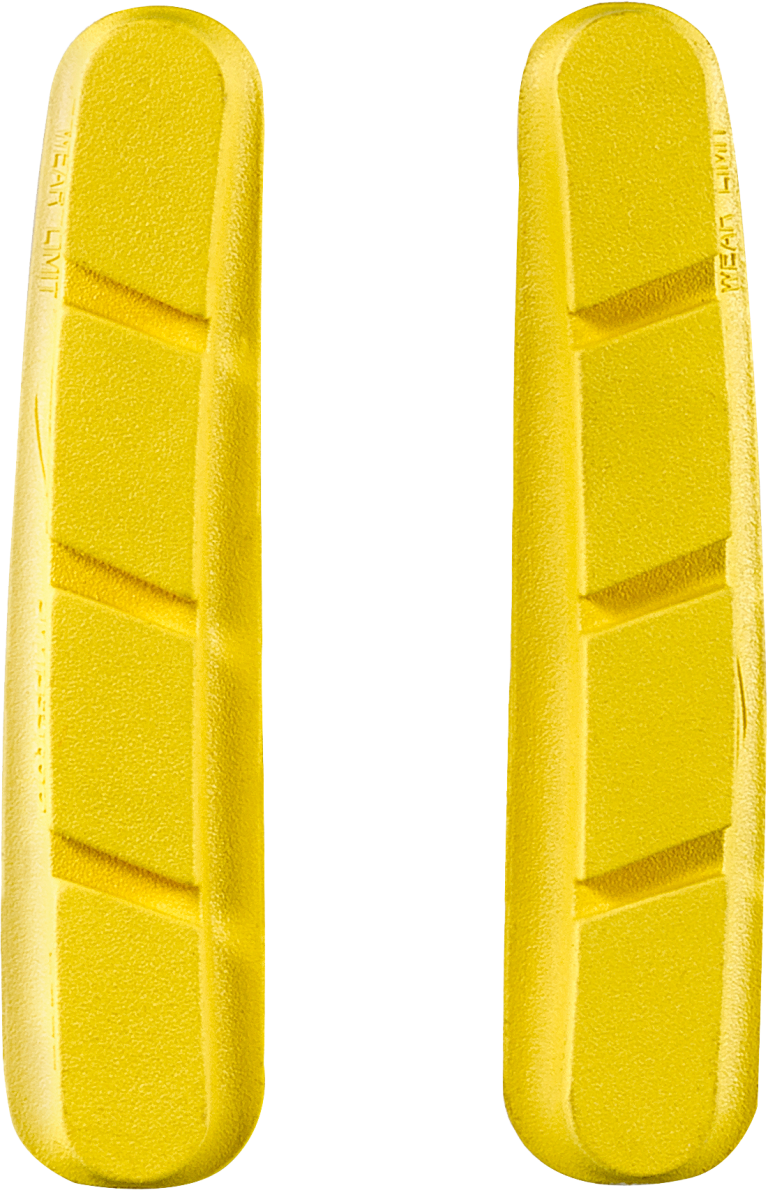
Road bike brake pads for carbon and aluminum rims

On a road bike with rim brakes, everything depends on the contact between the pad and the braking surface. A good pad means more control, better braking distances, and confidence that stays with...


RecommendedSort By

Choosing the right brake pads means gaining control, safety, and consistent braking, especially when the weather deteriorates or the descent is long. Carbon and aluminum rims have different requirements in terms of compound, adjustment, wear, and braking technique. In this FAQ, we answer the most frequently asked questions to help you choose the right brake pads, check for wear, and brake more effectively, whatever your level.
FAQ


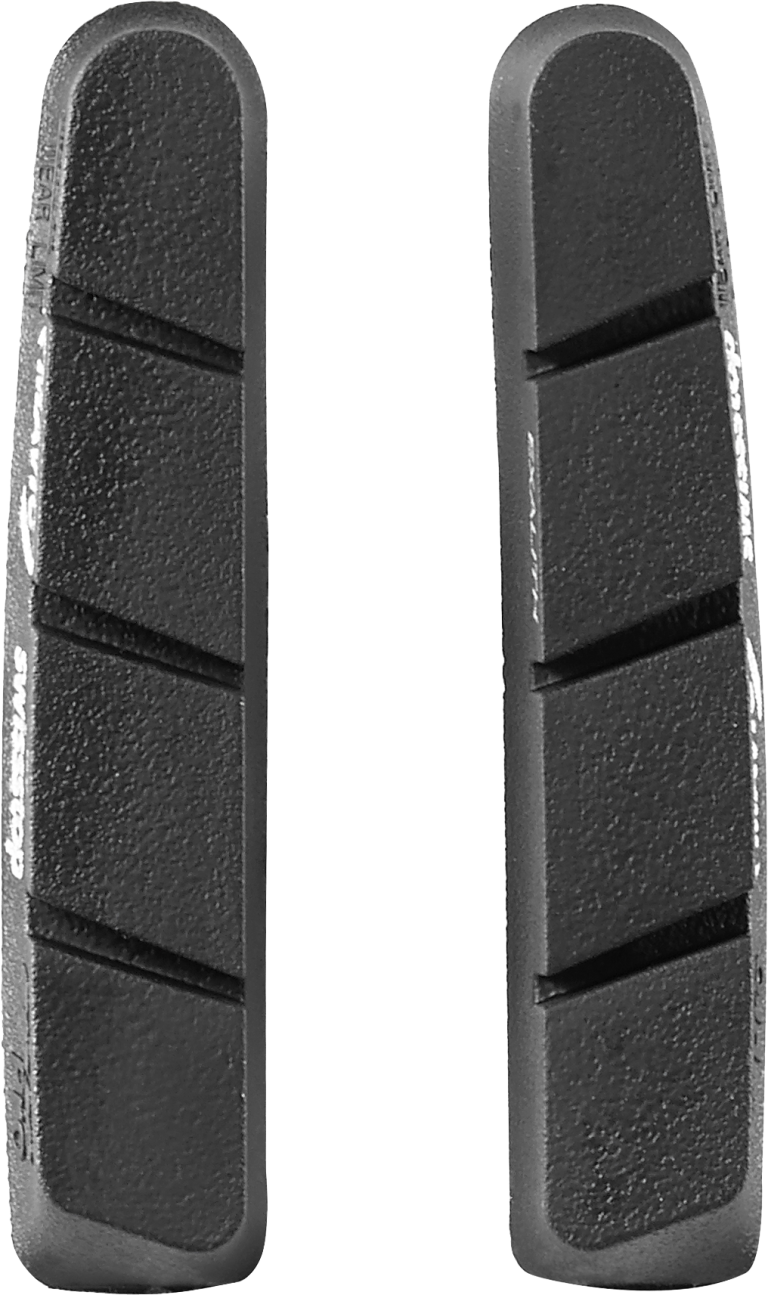
“Carbon” brake pads are designed for carbon brake rotors (heat management, progressive braking, noise), whereas “aluminum” brake pads are optimized for aluminum. On carbon rims, it is recommended to follow the instructions for the wheels (compatibility + safety + warranty).


In practice, it’s best to avoid this. A brake pad used on an aluminum rim can become coated with metal particles (or grit); if then reused on a carbon rim, it can mark or damage the braking surface. The right approach: a set of brake pads specifically designed for carbon and a set specifically designed for aluminum.


Three simple rules:

  • The brake pad must be aligned with the brake track (neither too high nor too low).
  • It must never touch the tire.
  • It must be parallel to the track (with a slight “toe-in” possible; see next question).

For installation/replacement, the instructions for the “rim brakes” are detailed (procedure + adjustments).


The most effective adjustment is toe-in: the front edge of the brake pad touches the rim slightly before the rear edge, which reduces vibrations and thus noise. When adjusting, use a plastic card such as a credit card and place it on the rear third of the skate, which will allow for a slight forward tilt.

Next: clean the track, check the tightness, and inspect the skate for ice buildup or contamination (no greasy products).

?

Many skates have wear indicators: when they disappear (or the rubber becomes too thin), it’s time to replace them. Never skate down to the sole/baseplate: you risk damaging the rim and compromising safety. (Note: The brake track on the rim may also have a wear indicator.)


Yes, you need to remove them: a embedded grain or chip acts as an abrasive and wears down the rim + impairs braking. Remove the particles, then very lightly sand the brake pad surface (with fine-grit sandpaper) if necessary, and clean the braking surface (do not use greasy products).


Avoid “dragging” the brakes (light, continuous braking), which causes the temperature to rise. Opt for intermittent braking (slow down, release, repeat), and distribute the braking force between the front and rear brakes. For carbon wheels, it is important to follow this technique to limit heat buildup and prevent temperatures from rising too high.


In the rain, it takes a moment for the rim to “dry” under the brake pad: anticipate this and apply a brief initial braking action to clear the water before braking harder.

On carbon rims, the sensation may be more gradual than on aluminum: anticipate more and maintain steady pressure rather than applying sharp, abrupt stops.


Yes: After installation, perform a few gradual braking maneuvers (at moderate speed) to stabilize the brake pad/rim contact, check the alignment, and confirm there are no noises or leaks from the adjustment. And after the first few rides, re-check the alignment: a brake pad may shift slightly relative to its braking surface.